
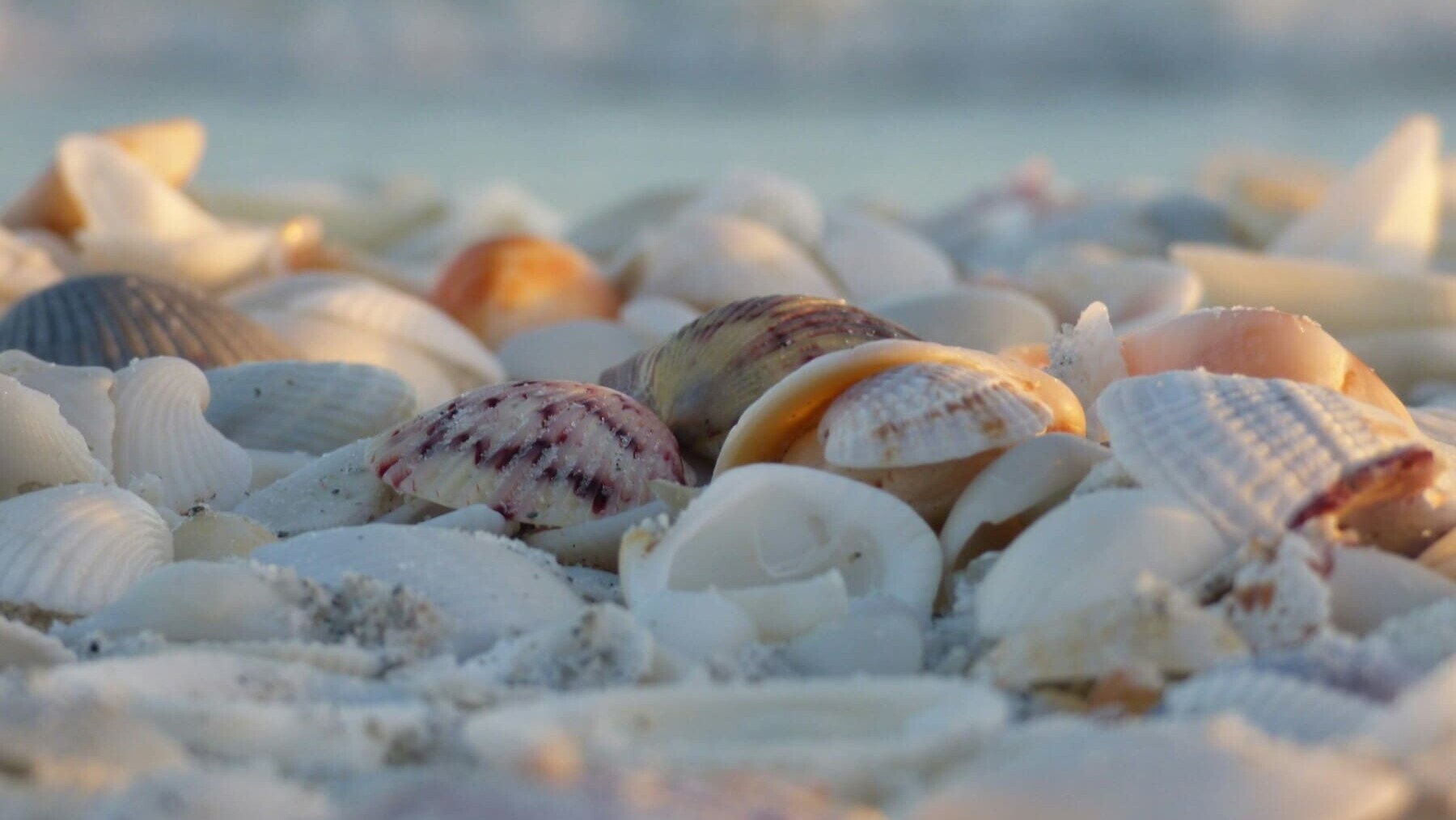
Shelling on Siesta Key is one of those “small moments” that ends up being a vacation highlight — especially when you know what to look for. Picture this: you’re out early, the beach is quiet, the shoreline looks freshly rearranged, and suddenly you start spotting little pops of color and shine along the wrack line.
Now for the honest local take: Siesta’s famous powdery sand isn’t a “bucket-full-every-10-steps” shelling beach. But if you go at the right time, walk the right stretches, and know the simple “after surf” shortcut, you will find plenty of small treasures (and kids tend to love it).
And if you want to level up your beach hunt? We’ll also cover nearby “bonus spots” within about an hour — including the Venice-area shark tooth hunt. Not sure what the water will be like during your trip? Our Water Temperature by Month guide helps set expectations, and our Beach Guide has the full breakdown of every beach on the island.
Quick Answer: The Siesta Key Shelling Cheat Sheet
Best OddsWhen to Go
- Best months: late fall through spring (more “churn” days).
- Best time of day: sunrise to mid-morning.
- Best shortcut: go the morning after choppy surf or a windy day.
- Reality check (good news): expect pockets + small wins that add up.
Where to Look
- Start: walk the wrack line first (that’s the “treasure belt”).
- Then: scan the waterline on wet sand for sparkle and clusters.
- Best Siesta Key picks: Turtle Beach + Crescent Beach / Point of Rocks pockets.
- Less foot traffic = better odds: walk away from the busiest entrances.
Bonus “Wow” Hunt
- Best nearby bonus spot: Venice-area beaches for shark teeth (easy day trip).
- How to win: go early + focus on shell/gravel patches at the waterline.
- Kid factor: tiny teeth still feel like real treasure.
What to Remember
- Go early.
- Walk the wrack line.
- After surf = better finds.
- Look for pockets, not one-offs.
Best Times for Shelling on Siesta Key (Vacation-Planning Friendly)
Shells show up when the shoreline gets “refreshed.” That usually comes down to wind + waves — not luck. If you’re planning a trip (or building a “morning beach walk” routine), here’s the simplest way to time it.
Late fall through spring: best overall odds (especially for snowbirds)
Why it’s the sweet spot
Weather patterns tend to bring more “churn days” that move sand and shells around. You’ll notice more mornings where the water was rough the day before — and the wrack line looks freshly rearranged.
What to do (simple)
Aim for early mornings, and prioritize days when the Gulf was noticeably choppy or windy yesterday. Walk the wrack line first, then scan the waterline for pockets.
Snowbird-friendly tip
Build a quick shell walk into your routine. Even 30–45 minutes a few mornings a week adds up to surprisingly good finds.
Summer: still worth it (just play it smarter)
How summer behaves
Summer can absolutely produce shells — especially after breezy days — but calmer stretches can mean fewer “freshly delivered” shells.
Your two biggest advantages
Go early (before the beach gets heavily walked), and target the wrack line plus the waterline edges. Those zones stay productive even on quieter Gulf days.
Family win
Summer mornings are perfect for a low-stress “treasure hunt” walk — quick, cooler air, and plenty of small “wins” for kids.
Early fall: the “wild card” shoulder season
What to expect
Early fall can be a mix — some calm periods, some stronger surf days. Your best strategy is timing-based.
The best play
Prioritize mornings after choppy surf, walk the wrack line first, then scan pockets near the waterline.
Expectation (in a good way)
Think “pockets that pop” rather than constant piles. When you find one shell, slow down — clusters are common.
Best Time of Day + Tide + “After Surf” Logic (Simple, No Nerd Mode Required)
This is where most people go wrong: they pick the right beach… but the wrong time. A few small timing tweaks can make shelling feel dramatically more “successful,” especially if you’re going with kids.
Best time of day
Sunrise to mid-morning (before the shoreline gets heavily walked and the wrack line gets picked over).
Second-best window
Late afternoon/early evening after crowds thin out — ideal for a relaxed family stroll.
Higher tide / incoming
Scan the upper wrack line and the band just above the waterline.
Lower tide / outgoing
Scan the exposed wet sand and waterline edges where shells get revealed.
Fastest “upgrade”
Go the morning after choppy surf (or a windy day). The beach gets “re-sorted,” and pockets are more likely to show up.
What to look for
Think pockets and clusters, not one-off shells. When you find one, slow down — there are often more nearby.
A Perfect Siesta Key Shelling Morning (Easy Vacation Itinerary)
If you want a plan that actually fits a vacation schedule, this simple routine works for families, snowbirds, and casual shellers.
-
Start
Arrive early. Sunrise to about 9:30am is your “best odds” window.
-
Pick 1
Choose one beach zone (don’t beach-hop — it burns your best time).
-
Pass 1
Wrack line first for 20–30 minutes — scan slowly for clusters/pockets.
-
Pass 2
Waterline next for 20–30 minutes — wet sand makes small shells “pop.”
-
Finish
Quick rinse + a “highlight photo.” Kids love the shell highlight reel.
Best Shelling Beaches on Siesta Key (Beach-by-Beach)
Different areas have different “shell personalities.” Here’s how to choose based on your vacation vibe — and where to look once you’re there.
Siesta Key Public Beach
Best for: families who want amenities + a shelling add-on
Shelling expectations: more “casual finds” and small pockets rather than heavy shell zones
Where to look:
- Start at the wrack line first (especially after choppy surf).
- Then scan the waterline for small shells that sparkle on wet sand.
- Walk away from the busiest entrances if you want fewer footprints.
Crescent Beach
Best for: long, scenic walks + consistent pocket potential
Why it works: it’s a great “walk and scan” beach where pockets show up after churn
Where to look:
- Wrack line on “after surf” mornings.
- Waterline edges for smaller shells and fragments.
Point of Rocks (Crescent Beach south end)
Best for: families who like exploring + serious shellers who want pocket hunting
Why it’s special: structure changes wave movement, which can create interesting little zones
Where to look:
- Sandy patches adjacent to rocky areas.
- Small protected nooks and pocket zones after choppy days.
Practical note: water shoes help here (comfort and confidence).
Turtle Beach
Best for: shelling-first mornings (especially if your kids want “more stuff to find”)
Why many locals love it for shelling: you’ll often see more shell pieces and variety compared to the soft-sand zones
Where to look:
- Wrack line early.
- Waterline pockets after surf.
South Siesta / Quieter Stretches
Best for: peaceful beach walks + “surprise pockets”
Where to look:
- Wrack line on less-trafficked stretches.
- Scan for clusters rather than expecting a constant stream of shells.
What You’ll Realistically Find (Set Expectations, Then Have More Fun)
Siesta Key shelling is about small treasures, variety, and moments — not nonstop piles. When you go early and “read” the wrack line, you’ll usually find something. The bigger “wow” finds are the bonus.
Common “wins” on Siesta Key
- Coquinas (small, colorful clamshells)
- Scallop shells (often as fragments)
- Augers (slender spiral shells)
- Olives (smooth, bullet-shaped shells—often smaller)
- Whelk/tulip fragments (great “epic-looking” finds for kids)
- Tiny “mystery shells” kids love collecting in a small container
Occasional “lucky finds”
- More intact spirals (especially after churn)
- Unusual patterns and colors
- “Perfect little pair” coquinas that match (kid jackpot)
How to Actually Find Shells (Techniques That Work)
If you’ve ever walked the beach and thought, “Where are the shells?” — this is the fix. The goal isn’t covering miles fast. It’s scanning the right zones in a way that helps your eyes “lock on” to shape, shine, and clusters.
1) Walk the wrack line like it’s a treasure belt
The wrack line is where the beach deposits seaweed and small debris after waves — and it’s also where shells collect. Walk it slowly and scan for:
- Symmetry (matching halves, clean curves)
- Shine (shells catch light differently than sand)
- Color pops (white, pink, purple, orange)
2) Look for “pockets,” not individual shells
Shells often cluster in little groups. When you find one, slow down — there are usually more nearby. (This is where kids suddenly start finding a bunch at once.)
3) Use the “two-pass” method
- Pass 1: wrack line (fresh deposits)
- Pass 2: waterline (wet sand reveals sparkle)
4) Serious sheller upgrade (optional)
If you want to level up your odds on a good “after surf” morning:
- Do a slow zig-zag along the waterline
- Scan the transition zone where wet sand meets slightly drier sand
- Spend extra time where you see shell fragments already collecting
Gear Checklist + Kid-Friendly Tips (Vacation Practical)
You don’t need much — just a few smart items that make shelling easier (and keep it fun instead of “sandy chaos”).
Quick gear checklist
Mesh bag (sand falls out, shells stay in)
Small kid container (with a “favorites only” rule)
Water shoes (especially for Point of Rocks exploring)
Rinse bottle (quick cleanup so shells don’t stay sandy all day)
Optional: sand sifter scoop (especially for Venice shark teeth)
Optional: zip bag + paper towel (for keeping a few favorites from scratching)
Nearby Bonus Spots (≤ 1 hour): Venice Shark Teeth + More
If you want a “vacation highlight” activity that’s different from classic shelling, this is it. The Venice-area shark tooth hunt is a true treasure hunt (and it’s surprisingly kid-friendly). Then, if you have time, a few other nearby beaches can be fun “bonus walk” options—especially after breezy or choppy days.
Venice-area shark teeth (the can’t-miss bonus)
What to expect: Most teeth are small (think “dime-sized and smaller”), but that’s part of the fun — especially for kids. It feels like a real treasure hunt.
Best strategy (simple):
- Go early (same rule as shelling).
- Look where small shell/gravel patches collect.
- Use a sifter scoop if you have one (it speeds things up).
- Focus on the waterline and shallow wash zones.
Family tip: Turn it into a “tooth count” challenge. Kids love finding tiny ones.
Bonus beaches within about an hour (pick 1–2)
These can be great add-ons depending on your schedule and where you’re staying. Keep expectations realistic — these are “bonus” beaches, not guaranteed hauls.
Caspersen Beach (Venice area): popular shark tooth hunt vibe; best with a sifter.
Venice Beach area: another classic option for the “tooth treasure hunt” style morning.
Nokomis Beach: easy day trip for a classic beach walk + occasional shell pockets.
Casey Key: quieter-feel shoreline walks; pockets can pop after churn days.
Manasota Key: fun explore-and-walk shoreline for shell fragments and variety.
FAQ
What is the best month for shelling on Siesta Key?
Your best overall odds are late fall through spring, when wind and wave action more often refreshes the shoreline and create better shell pockets. The simplest “local rule” is to go early the morning after choppy surf.
What beach on Siesta Key has the best shells?
Many visitors have the best luck at Turtle Beach for shell pieces and variety, and Crescent Beach/Point of Rocks for pocket hunting and exploring — especially on early mornings after choppy surf.
Is Turtle Beach better for shelling than Siesta Beach?
Often, yes — especially if your goal is “find more things.” Siesta Beach is famous for soft sand and amenities, but Turtle Beach can feel more rewarding for shell hunters because you’ll often see more shell pieces and variety.
What time of day is best for shelling?
Early morning is best — sunrise through mid-morning — before the beach gets heavily walked and while the wrack line is easiest to read. Late afternoon can be a good second option after crowds thin out.
Should I go shelling after a storm or choppy surf?
Yes. The easiest shortcut is going the next morning after choppy surf, when the shoreline has been “re-sorted” and shell pockets are more likely to appear.
What shells can you find on Siesta Key?
Common finds include coquinas, small scallop fragments, augers, olives, and spiral fragments. Bigger intact shells are possible — especially after churn days — but they’re less common.
Can kids find good shells on Siesta Key?
Absolutely. Kids do great with the “pocket” approach — wrack line first, then a waterline scan — and a simple mission like “find 3 colors” or “find 5 shapes.”
Where can I find shark teeth near Siesta Key?
The easiest nearby day trip is the Venice area, where shark tooth hunting is a popular beach activity. Go early, scan the waterline and small shell/gravel patches, and use a small sifter scoop if you can.
What should I bring for shelling?
A mesh bag, a small kid container, water shoes (especially near Point of Rocks), and a rinse bottle are the main essentials. If you’re doing Venice shark teeth, a small sifter scoop helps a lot.
What should I avoid collecting?
Avoid taking living shells (if something is alive in it, return it). And keep it simple: a few favorites are more fun than hauling home everything.
Related Guides
Want the easiest trip plan? These guides pair perfectly with shelling mornings.
Month-by-month context for crowds, weather, and the “best beach mornings.”
Which beach fits your group — access tips and the best match for every travel style.
Siesta Key Water Temps by Month
Monthly Gulf temps — helpful for knowing water conditions during your shelling days.
How wind + surf affect clarity (helpful for picking your best “beach walk” day).
Siesta Key Beach Parking Guide
Arrival windows by season so you hit the early shelling window.
What to Pack for Siesta Key (By Season)
Beach-day essentials (mesh bag, rinse bottle, water shoes) that make shelling easier.
Simple do/don’t guidance that keeps beach walks wildlife-friendly.
First-Timer’s Guide to Siesta Key
The complete planning framework for first visits.
Practical planning for late summer/fall travel (without alarmism).
What “busy” feels like — and how to plan beach time when it peaks.
Find your Siesta Key vacation rental
Browse our handpicked homes and condos — walkable locations, 5-star stays, and local support that makes your trip feel effortless.
-
✓
Best trips start with the right location — filter by beach access, Village proximity, and more.
-
✓
Comfort-forward amenities — pools, kitchens, parking, and the “little things” families love.
-
✓
Local team — real people, real help, and insider tips once you arrive.
Insider tip: Peak weeks (especially winter + spring break) book early — if you see a great fit, snag it.