
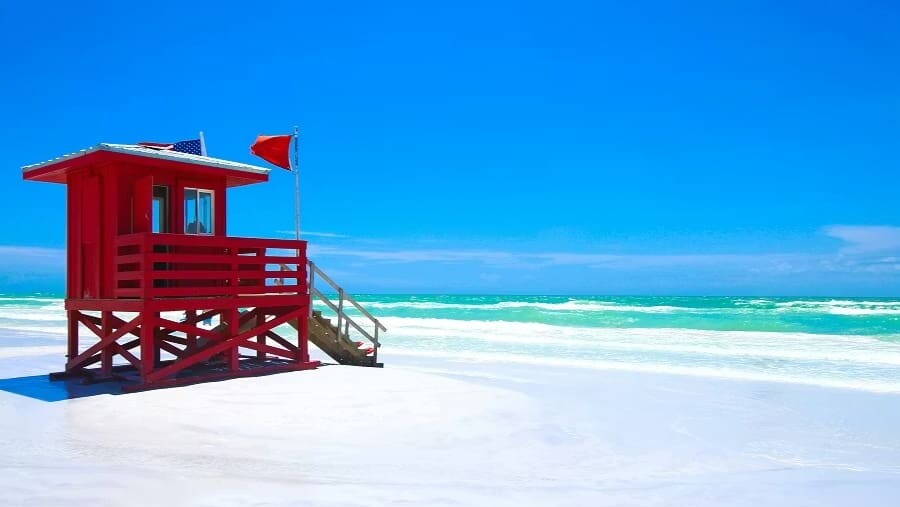
Siesta Key Water Clarity — Quick Look
CLEAR WATER TIPSWhen it’s usually clearest
- Calm stretches (lighter winds + smaller waves) are your best bet.
- Mornings often look clearer than afternoons.
- For snorkeling visibility, prioritize calm surface + bright sun.
- After stormy weather, clarity often improves once the Gulf settles.
What makes it look less clear
- Wind + wave action stirring sand in shallow water.
- Recent storms (the water can stay “mixed up” for a bit).
- Choppier conditions near shore (even if the water still looks blue-green).
- High-traffic splash zones (kids playing = fun… and also stirred sand).
If you only follow one rule…
Put your “must-have clear water moment” (beach photos, floating, snorkeling) on an earlier morning—and keep one flexible window if you can. It’s the easiest way to upgrade your Siesta Key vacation without changing your dates.
What “Water Clarity” Means (In Plain English)
Water clarity is simply how “transparent” the water looks—how easily you can see into it. On Siesta Key, the most common reason the Gulf looks less clear near shore is simple: waves stir up fine sand. When conditions calm down, those tiny particles settle, and the water often looks dramatically clearer.
Most travelers mean “clear-looking shallows” (seeing your feet). Snorkelers usually mean underwater visibility. The good news: the planning rules overlap—calmer water wins. If snorkeling is part of your Siesta Key vacation plan, focus on calm surface conditions.

What Affects Water Clarity on Siesta Key
1) Wind + wave action (the biggest driver)
Think of the shoreline like a snow globe. The more the Gulf “shakes” it, the more particles get suspended in the water—especially in shallow areas. When wind picks up, it creates surface chop and waves. Those waves can stir sand near shore and make the water look less clear.
2) Storm systems + heavy rain (short-term changes)
After stormy weather, the Gulf can stay stirred up for a bit. This is usually temporary. Once conditions calm down, clearer days often return—especially if you have a few calmer days in a row during your Siesta Key stay.
3) Time of day (a practical vacation advantage)
Many days start calmer and get breezier later. That’s why travelers who prioritize clear water often do their “must-do” beach time earlier—then shift to lunch, shopping, or pool time later if the breeze builds. It’s a simple tactic that fits almost any Siesta Key vacation style (families, couples, and snowbirds alike).
4) Tides (minor—useful as a fine-tuning detail)
Tides don’t “create” clarity, but they can influence how snorkeling areas feel and what you see near rocky zones. Treat tide as a minor planning factor—wind and waves matter most.
Quick read: what to look for
These simple “signals” help you plan without obsessing over forecasts.
- Lighter winds or a calm-feeling beach walk
- Smoother surface (less chop)
- A few calm days in a row
- Morning beach time
- Breezier conditions + steady wave action
- Recent storms or a big wind shift
- Lots of shoreline churn in the shallows
- Afternoon sea-breeze build (common in warmer months)
Where to Go for the Best “Clear Water” Experience on Siesta Key
If your goal is the classic Siesta Key “clear water” look (wading, floating, family beach time), you’ll love the broad shallows at Siesta Beach. If your goal includes underwater visibility for snorkeling, head south toward Crescent Beach and Point of Rocks.
Clear-water beach day checklist (quick win)
Go early (mornings are often calmer)
Do your must-do first (photos, floating, snorkeling)
Watch the surface: smoother water usually looks clearer
Bring water shoes for Point of Rocks (rocky entry)
Keep one flex window to swap beach days if it turns breezy
If it looks “mixed up,” try again the next morning
Seasonal Odds for Clear Water (Planning Friendly)
Here’s the most honest way to plan: seasons influence your odds, but calm weather windows matter more than the calendar. If you can give yourself a few days on-island, you usually catch at least one “wow” water day—especially helpful when you’re investing in a full Siesta Key vacation.
Winter (Dec–Feb)
Winter can deliver stunning calm-water days, but conditions can swing with passing weather systems. Longer stays tend to catch multiple clear-water windows.
Spring (Mar–May)
Spring often has strong clear-water potential and excellent beach weather. For the clearest-looking shallows, morning beach time is a smart habit during a Siesta Key vacation week.
Summer (Jun–Aug)
Summer frequently shines early in the day, with breezes building later. Your best clear-water strategy is simple: do the Gulf first, then do the rest of the day.
Fall (Sep–Nov)
Fall can deliver gorgeous clear-water days during calmer stretches. The win is giving yourself enough days to catch one, then going early.
If your dates are fixed
Plan your clearest-water activities earlier in the day, earlier in your trip, and keep one flex window for swapping plans. It’s the best “fixed dates” move for any Siesta Key vacation.
Local nuance that helps
In warmer months, afternoon sea breezes can be common—meaning mornings often feel calmer. NOAA has a simple explanation of sea breeze behavior: Read it here.
Your “clear water” plan in 3 steps
-
1
Lock in one early morning. Put your must-do water moment (photos, floating, snorkeling, paddleboarding) on a morning when the Gulf is often calmest.
-
2
Build one flex window. If you can swap beach days during your trip, you’ll almost always catch a calmer stretch.
-
3
After storms, give it settling time. Clear-looking water often returns once wind and waves ease and the sand can settle back down.
Want to plan a Siesta Key vacation around calm mornings?
If clear water is a priority, staying close makes it easier to catch those early, calmer beach windows—especially with kids or a full beach setup.
Snorkeling + Underwater Visibility: Point of Rocks (Local Favorite)
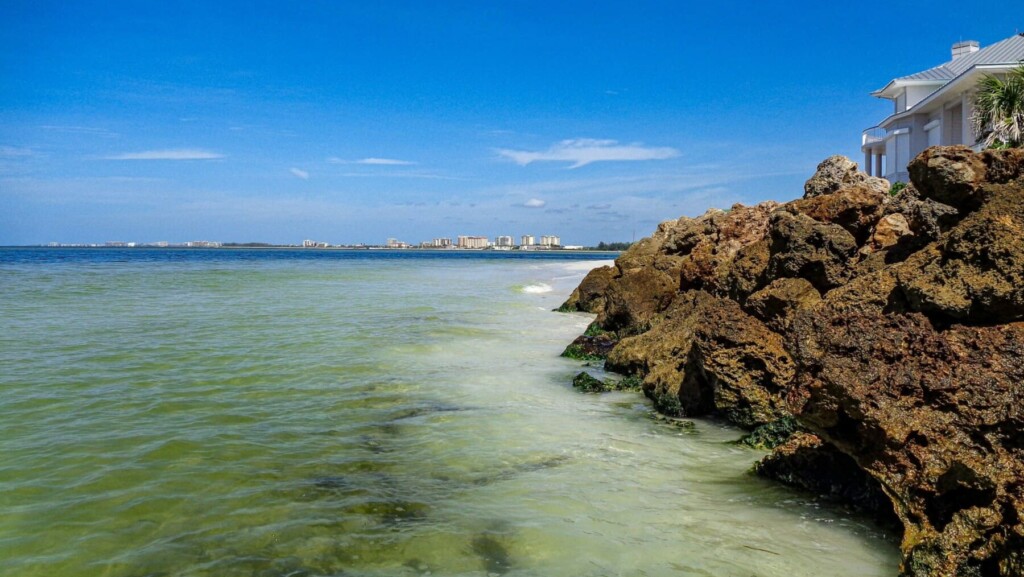
If your version of “clear water” includes snorkeling visibility, Point of Rocks (near the south end of Crescent Beach) is the go-to spot most locals point you toward. On calm, sunny days, it can be one of the most memorable “nature moments” of a Siesta Key vacation—especially for couples and families with older kids.
Point of Rocks: quick facts
Best conditions
Calm surface + bright sun (visibility improves when the Gulf is settled).
Bring
Mask/snorkel + water shoes (rocky areas can be uncomfortable barefoot).
Timing
Earlier is often smoother (and feels easier for first-time snorkelers).
Pack help
Need a checklist? See: What to Pack for Siesta Key (By Season).
60-second clarity check (no forecast promises)
-
1
Check wind speed. Lighter winds usually mean a smoother surface and clearer-looking shallows. If it feels breezy, expect more chop and stirred sand near shore.
-
2
Look at a live beach cam. You’ll instantly see surface chop and water color before you load up the car.
-
3
If you’re snorkeling, prioritize calm surface over “blue color.” Underwater visibility improves most when the Gulf is settled.
-
Optional
Tides (fine-tuning): useful around rocky zones, but wind/waves still matter most.
FAQ: Siesta Key Water Clarity + Clear Water Planning
Is Siesta Key water usually clear?
Siesta Key can have beautifully clear-looking water—especially during calmer stretches. The biggest day-to-day difference is usually wind and wave action, not the month on the calendar.
When is the water clearest on Siesta Key?
Your best odds are during calmer windows (lighter winds + less surface chop), and often earlier in the day. Seasons influence how often calm windows happen, but conditions matter most.
What affects Siesta Key water clarity the most?
In most cases it’s wind and waves stirring fine sand in shallow water near shore—especially after stormy weather or on breezier days.
Is morning clearer than afternoon on Siesta Key?
Often, yes. Many days start calmer and get breezier later. It’s not guaranteed, but it’s a very practical vacation planning rule if clear water is a priority.
Does tide affect water clarity or snorkeling visibility?
Tide is usually a minor factor compared to wind and waves, but it can affect how snorkeling areas feel and what you see around rocks. Use tides as a fine-tuning detail—calmer water still wins.
Where is the best snorkeling spot for visibility on Siesta Key?
Point of Rocks (near Crescent Beach) is the island’s best-known snorkeling zone, especially on calm, sunny days when the surface is settled.
What’s the best strategy if my Siesta Key vacation dates are fixed?
Plan your clearest-water activities earlier in the day, earlier in your trip, and keep one flex window if possible so you can swap beach plans when conditions are calmer.
Find your Siesta Key vacation rental
Browse our handpicked homes and condos — walkable locations, 5-star stays, and local support that makes your trip feel effortless.
-
✓
Best trips start with the right location — filter by beach access, Village proximity, and more.
-
✓
Comfort-forward amenities — pools, kitchens, parking, and the “little things” families love.
-
✓
Local team — real people, real help, and insider tips once you arrive.