
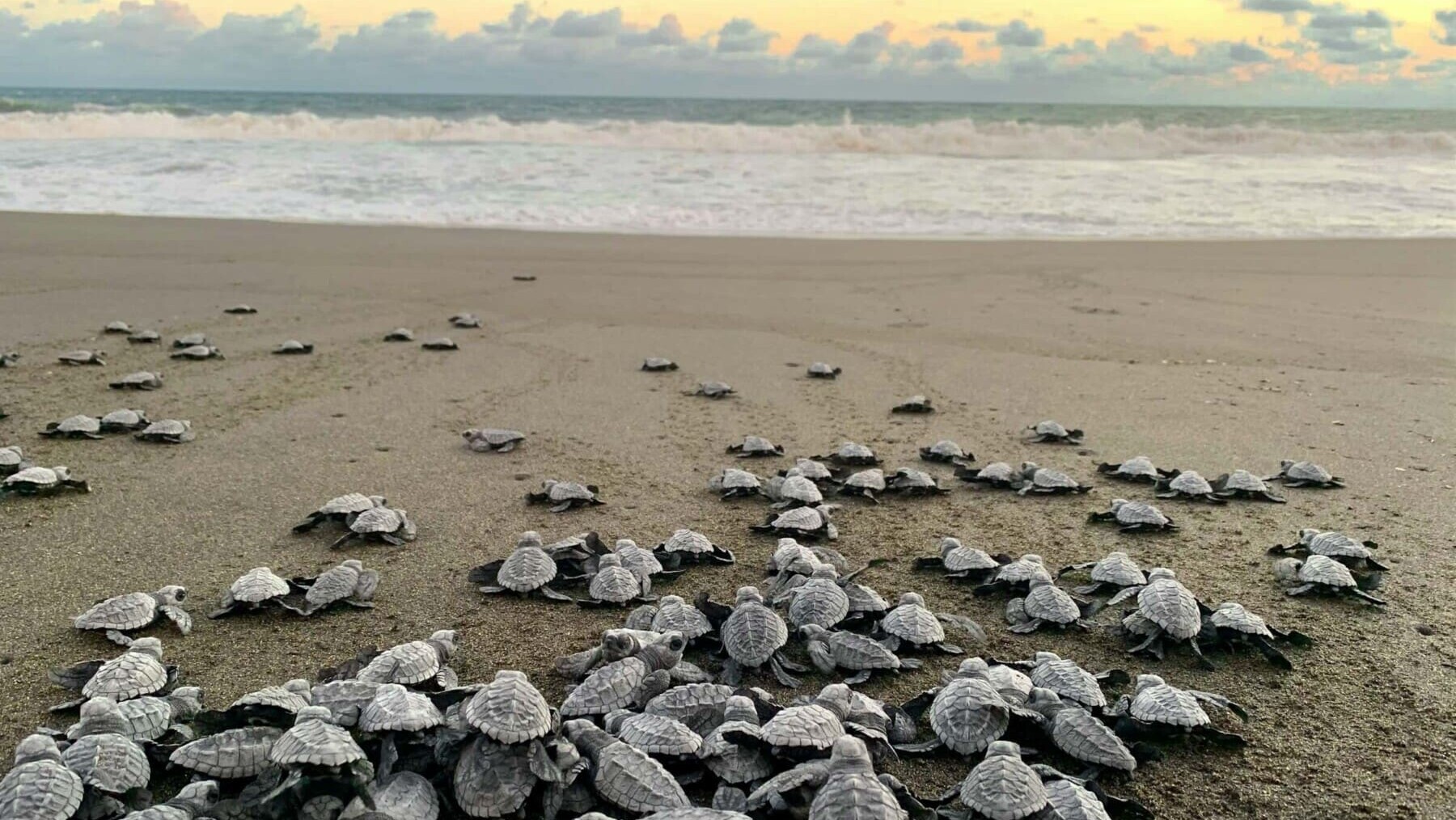
If you take an early-morning walk on Siesta Key in summer, you might notice something that wasn’t there the night before: wide, looping tracks in the sand, like someone dragged a giant rake from the water toward the dunes and back again. That’s one of the quiet signs that turtle season is part of the island’s story.
If you’re visiting during Siesta Key sea turtle nesting season, a few simple habits (especially around lights and leaving the beach clear) make a real difference. Think of this as your friendly guide to sea turtle nesting season on Siesta Key—what it means, what to do, and the simple habits that protect turtles without turning your vacation into a rulebook.
If you’re choosing travel dates (especially for the summer months), this pairs perfectly with our month-by-month planning hub: https://siestastays.com/best-time-to-visit-siesta-key/
When is sea turtle nesting season on Siesta Key?
Quick answer: Siesta Key sea turtle nesting season
In Sarasota County (including Siesta Key), sea turtle nesting season is generally treated as May 1 through October 31. Most nesting happens at night, so visitors usually notice the season through morning tracks, marked nest areas, and more “lights out” reminders near the beach.
- Most nesting happens at night — tracks in the morning are often the “sighting.”
- Hatchlings are more common later in the season because nests incubate for roughly two months (timing varies).
- Your biggest impact as a guest: keep the beach clean, dark, and flat.
The easiest rule to remember: During turtle season, aim for a beach that’s clean, dark, and flat before you leave for the night.
You don’t need to be a wildlife expert to do turtle season “the right way.” The island already has a strong conservation culture — and as a guest, your job is simply not to add extra obstacles, light, or crowd pressure when turtles are doing what they’ve done here for generations.
What you might notice on the beach (and what it means)
Morning tracks in the sand
The most common “turtle moment” for visitors is seeing tracks in the morning. They can look like sweeping tire marks or a wide, wavy path up and back from the water. The best way to enjoy them is simple: admire from a distance, take a quick photo, and keep walking—tracks are a story, not an invitation to investigate.
Marked nest areas
On protected beaches, nests are often identified and marked by permitted teams. If you see posted tape, stakes, or signage, treat it like a quiet “do not enter” zone. Even well-meaning curiosity (standing too close, kids playing nearby, moving sand) can damage a nest without anyone realizing it.
Hatchling signs (more common later in the season)
Hatchlings are more likely later in the season because eggs incubate for about two months on average (timing varies). If you’re on the beach early and notice tiny, scattered tracks, give the area space and avoid adding light at night—hatchlings rely on natural cues to orient toward the Gulf.
How to be a good guest during turtle season on Siesta Key
Think of this as friendly local beach manners. The habits below help turtles, keep the shoreline safer for everyone, and prevent those awkward moments where someone has to tell your group to back away from a marked area.
Turtle-season beach manners (easy Do + Please don’t)
Small choices make a big difference — and they’re easy to follow on vacation.
Do this
- Use marked paths and walk on wet sand near the waterline when possible
- Keep beach gear close to your group and out of any posted/roped areas
- Fill in holes and flatten sand “trenches” before you leave
- Pack out trash — even small bits (food scraps draw predators)
Please don’t
- Don’t cross ropes, cones, or posted markers — those areas protect nests
- Don’t shine flashlights or phone lights on the beach at night
- Don’t set up chairs/umbrellas in posted zones (even “just for a minute”)
- Don’t leave items behind that can trap or block hatchlings
Nighttime beach behavior + condo lighting etiquette (simple and doable)
One of the biggest issues during nesting season isn’t daytime beach traffic — it’s light. Artificial lighting can confuse nesting females and disorient hatchlings that rely on natural cues to find the Gulf. The guest-friendly version is simple: keep light out of sight from the beach at night.
Turtle-safe night checklist (condo-friendly)
These are the quick wins that help protect nesting beaches — especially if your rental has a balcony or is near the sand.
After dark: close curtains/blinds facing the beach
Turn off balcony/patio lights when you’re not actively using them
Skip string lights and bright LEDs near windows
On the beach at night: keep phone flash off (no flash photos)
If you need light for safety: use a dim, shielded light aimed down — then turn it off
Teach kids the rule: “Dark beach = turtle beach”
And the good news: this isn’t complicated or stressful. For most guests it’s just a couple easy habits — turn off what you don’t need at night, close curtains on beach-facing windows, and leave the sand the way you’d want to find it in the morning.
If you see a turtle, hatchlings, or a nest: what to do
The best approach is calm and simple: give space, reduce light, and let trained responders handle it if something seems off. Most “turtle encounters” go best when people quietly step back and let nature do its thing.
If you see a nesting turtle
Back up and give her a wide buffer. Stay quiet and still. Turn off lights (and avoid flash completely). Most importantly, don’t position yourself between the turtle and the water — she needs a clear path back to the Gulf.
If you see hatchlings
Create space so they can move naturally. If nearby lights are on, turn yours off and politely encourage others to do the same. Don’t pick them up or try to “escort” them — that often causes more harm than good.
If hatchlings seem disoriented, injured, or you see harassment, contact trained responders using the Resources box below. Those hotlines exist for exactly this.
Family-friendly ways to enjoy turtle season (the respectful way)
Morning “track walk”: Take an early stroll and admire tracks from a respectful distance — it’s the most common (and coolest) turtle-season sighting.
Teach the three words: Make it your beach mantra — Clean. Dark. Flat.
Leave-no-trace game: Before heading in, do a quick “reset” together: fill holes, smooth big sand builds, and pack up tiny trash.
Pick calm beach moments: Sunrise, quiet tide-line walks, and gentle water time are ideal — less crowding, less light, more nature.
A quick note on nearby beaches
Siesta Key is the focus here, but turtle season is a shared effort across Sarasota’s barrier islands. If you beach-hop to nearby keys, the same habits still apply: keep lights minimized, gear off the sand overnight, and give marked areas wide space.
Resources: who to contact (save this)
Sea Turtle Nesting Season on Siesta Key — FAQs
When is sea turtle nesting season on Siesta Key?
In Sarasota County (including Siesta Key), nesting season is generally treated as May 1 through October 31.
When do hatchlings emerge on Siesta Key?
Hatchlings are more common later in the season because nests incubate for roughly two months on average (timing varies by nest and conditions).
Can I use a flashlight on the beach at night during turtle season?
Best practice is to minimize artificial light. If you truly need light for safety, keep it low, pointed down, and brief — and avoid shining toward dunes or the waterline.
What should I do if I see people disturbing a turtle or nest?
Create distance, don’t escalate in a way that puts you at risk, and report it using the FWC Wildlife Alert Hotline listed in the Resources section.
What if I find an injured or stranded sea turtle?
In Sarasota/Manatee coastal areas, call Mote Stranding Investigations at 888-345-2335. Don’t attempt to handle the animal yourself.
Related Siesta Key planning guides
More locally-written guides to help you plan a Siesta Key trip that feels easy (and respectful).
Best Time to Visit Siesta Key (Month-by-Month)
How weather, crowds, and seasonality change throughout the year — with practical planning tips.
Siesta Key Beach Parking Guide
When lots fill, where to go instead, and how to plan arrivals like a local.
What to Pack for Siesta Key (By Season)
A season-smart packing guide so you’re comfortable from beach mornings to breezy evenings.
Shelling on Siesta Key: Best Times + Local Tips
When to go, where to look, and how locals read the wrack line for better finds.
Find your Siesta Key vacation rental
Browse our handpicked homes and condos — walkable locations, 5-star stays, and local support that makes your trip feel effortless.
-
✓
Best trips start with the right location — filter by beach access, Village proximity, and more.
-
✓
Comfort-forward amenities — pools, kitchens, parking, and the “little things” families love.
-
✓
Local team — real people, real help, and insider tips once you arrive.