
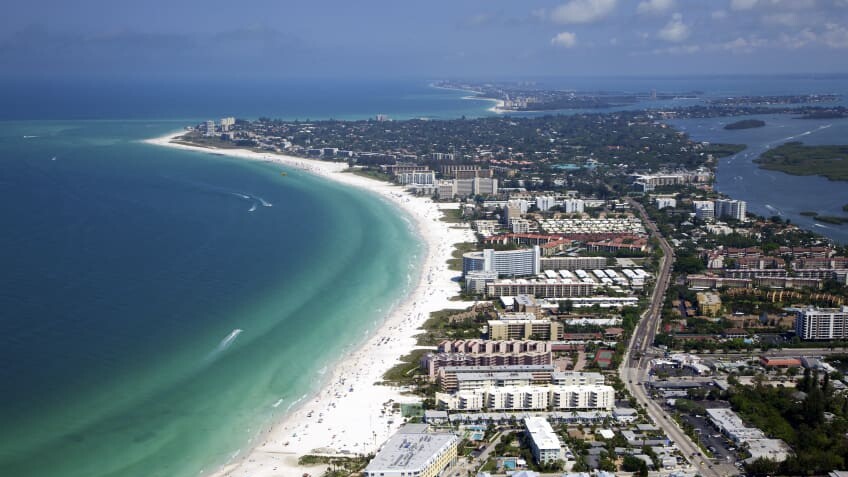
How to use this guide: Start with the “Which beach is right for you?” match section, then use the parking + access strategy to plan a smooth beach day—especially if you’re arriving during peak demand. Looking for more than beach days? Our Things to Do guide covers water adventures, Village nights, day trips, and 1/3/7-day plans.
Which Siesta Key beach is right for you? (Start here)
If you only read one section, make it this one. The “best beach” depends on your group, your gear, and how much you want to deal with parking and access.
60-second beach match quiz
Answer these quickly—then jump to your match below.
- Do you want amenities close by (restrooms, playground, concessions) with minimal walking?
- Are you prioritizing quiet or energy/people-watching?
- Is snorkeling a must—or just a “nice if it works out” bonus?
- Are you arriving with a full setup (chairs, cooler, umbrella), or traveling light?
- Does your group include little kids who need frequent resets?
- Is parking stress a dealbreaker?
- Is your priority sunset or a full-day beach hang?
Pick your match (quick answers)
Easiest all-day beach day
Siesta Beach (amenities + comfort + “easy resets”).
Quiet, mellow beach vibe
Crescent Beach (best if you can walk or arrive early).
Snorkeling + rocks
Point of Rocks (best on calm, clear days; conditions matter).
Best “backup plan” beach
Turtle Beach (park-style day + often less hectic than Siesta Beach).
Common mismatches (read this—this is where trips get frustrating)
If you need restrooms + snacks + shade breaks: don’t overcomplicate it—choose Siesta Beach.
If you want “quiet” but also hate logistics surprises: Crescent can be perfect if you can walk or you plan timing.
If snorkeling is your #1 goal: choose Point of Rocks, but treat it as a conditions-dependent win, not a guarantee.
If the Siesta Beach parking scene feels like a gamble you don’t want: Turtle Beach is often the best “still an awesome day” pivot.
Siesta Beach (the iconic, amenity-rich beach day)
Siesta Beach is the classic Siesta Key experience—wide shoreline, famously soft sand, and the most built-in comfort for families and groups. It’s the safest “easy mode” choice when you want a beach day that runs smoothly: bathrooms are close, resets are simple, and you’re less likely to leave early because the plan fell apart.
Siesta Beach Quick Look
BEST FOR FAMILIESBest for
- First-timers who want the simplest beach day
- Families who need easy “reset” amenities
- Groups who want space + a more social vibe
Plan for
- Parking is the main friction point
- Arrive early or shift your beach hours later
- Have a simple pivot (Turtle Beach works well)
Siesta Beach amenities (why it’s “easy mode”)
The main public beach area is designed for all-day beach time—meaning it’s built for comfort, not just scenery. If your group includes kids, anyone who needs frequent breaks, or you’re bringing a full setup, these amenities are what keep the day feeling relaxed instead of complicated.
- Restrooms + rinse-off areas: makes longer beach days easier and less “we have to leave” moments.
- Playground + open space: helpful when kids need a break from the water.
- Volleyball + activity zones: great if your group wants a more energetic, social beach day.
- Picnic areas and shaded spots: a simple upgrade for snack breaks and longer hangs.
In peak-demand periods, the main Siesta Beach public lot can fill by around 9:30 a.m. Weekends often fill earlier, and holiday weekends can fill as early as ~8:30 a.m.
Weather, events, and seasonality can compress arrival windows—treat these times as a planning benchmark, not a guarantee.
How to do Siesta Beach (smoothest version)
-
Step 1
Decide your vibe: full-day setup (chairs/cooler/umbrella) or travel light (towels + small bag). This determines how annoying a parking pivot will feel.
-
Step 2
Pick your arrival strategy: arrive early for the easiest day, or shift your beach hours later instead of circling during peak congestion.
-
Step 3
Choose your setup zone: stay closer to amenities for families, walk farther for a calmer feel, or set up nearer activity areas if your group wants volleyball and energy.
Crescent Beach (quieter, less “beach-park” energy)
Crescent Beach tends to feel more relaxed than the main public beach—less “beach hub,” more “classic shoreline.” It’s a favorite for long walks, calmer beach time, and couples who want a lower-key vibe.
The catch is simple: Crescent is often easiest when you can walk from where you’re staying or you’re intentional about timing. If you arrive with a full camp setup at peak times, it can feel more complicated than you expected.
Siesta Beach vs Crescent Beach (the differences you’ll actually feel)
Both are beautiful—this is about matching the beach to your trip style and logistics comfort.
Choose Siesta Beach if…
- You want amenities close by (easy resets)
- You’re traveling with kids or a big group
- You want the iconic “Siesta Beach day” vibe
- You’d rather not overthink the plan once you’re there
Choose Crescent Beach if…
- You want a quieter, mellow pace
- You love long shoreline walks
- You can walk from your rental or you’re flexible on timing
- You’re happy packing a lighter setup
How to do Crescent Beach (best experience)
-
Pack for ease
Crescent shines when you keep it simple: towels, water, snacks, and a small shade plan if you use one.
-
Time it right
Early mornings and later afternoons usually feel calmer and easier than peak mid-day congestion.
-
Choose access based on your gear
If you’re traveling heavy, pick the most convenient plan; if you’re traveling light, walkability becomes your superpower.
Point of Rocks (snorkeling + rocks + the right-day factor)
Point of Rocks is the most distinct “feature” on Siesta Key’s shoreline—rock formations, pockets of marine life, and a totally different feel than a sandy-bottom float. When conditions cooperate, it’s the snorkeling moment people remember.
But Point of Rocks is conditions-dependent. The best strategy is to decide based on what the water is doing, not just what your itinerary says.
Point of Rocks: “Worth it today?” checklist
Green light: You can see into the water from shore and it looks calm.
Green light: Your group is comfortable swimmers (or you’ll stay in easy areas).
Yellow light: A little chop is OK if snorkeling is a bonus, not the whole mission.
Red light: Choppy water + sand churn = low visibility. Pivot without regret.
Bring: Water shoes (rocks change everything).
Rule: Enter/exit thoughtfully—waves + rocks are not forgiving.
You’ll hear conflicting advice about tide at Point of Rocks—and both camps can be right depending on your goal. If you want more water over the rocks for comfort, you may prefer a higher-water window. If you want to see more rock structure and you’re comfortable with shallower conditions, you may enjoy a lower-water window.
For most visitors, the real deciding factor is simpler: calm water + decent visibility beats the “perfect tide” on a rough day.
Turtle Beach (south end: a different kind of beach day)
Turtle Beach feels less like the main “beach hub” and more like a park-style beach day—great when you want to pair beach time with a longer outdoors plan. It’s also a smart pivot when Siesta Beach feels too busy or parking gets frustrating.
Turtle Beach Quick Look
BEST PIVOT BEACHWhy people love it
- More “park day” energy than “main beach scene”
- Great for a longer, slower outdoor day
- Often a lower-stress pivot when Siesta Beach is hectic
Amenities (high-level)
- Restrooms + playground
- Picnic areas / shelters + grills
- Boat ramp + kayak/canoe access nearby
How to do Turtle Beach (best experience)
-
Make it a two-part day
Beach time first, then picnic/park time (or reverse). Turtle Beach is perfect when you want a longer outdoors day without rushing.
-
Pack like you’re staying awhile
Hydration + snacks + a simple shade plan makes this beach feel effortless.
-
Swim smart
If conditions feel beyond your comfort level, change the plan—this beach is still a win without pushing it.
Beach access + getting around (walkability vs car, simplified)
The easiest Siesta Key beach days usually come down to one thing: how close you are to the sand. Not sure which area puts you closest to the beach you want? Our Where to Stay guide matches every zone to walkability, beach access, and evening vibe.
If you can walk from your rental with a light setup, you avoid the two biggest friction points on Siesta Key: parking and timing. If you’re driving with gear (chairs, cooler, umbrella, toys), the quality of your day depends on arriving early, shifting your beach hours, or having a Plan B.
Important: many public beach access points are “walk-on” entries with very limited or sometimes no general parking (some are effectively just one ADA spot). Don’t treat access points like guaranteed parking lots—choose your beach plan based on your gear level and your tolerance for pivots. Planning your evenings after the beach? Our Events by Season guide covers markets, festivals, and local picks to pair with your beach days.
Traveling heavy? Choose the beach option with the most predictable parking plan for your arrival time, or build in a pivot.
Traveling light? Walk-on access becomes your superpower—especially for sunrise, sunset, and calmer “no-stress” beach time.
Siesta Key beach parking strategy that actually works (Plan A / Plan B / Plan C)
Plan A (best): Pick an early arrival window, or shift your beach hours later in the day. The goal is to avoid arriving right when everyone else does.
Plan B (smart pivot): If the Siesta Beach parking scene feels maxed out, switch the beach style, not just the lot you’re circling. Turtle Beach is often the best “still a great day” alternative when you want an easier reset.
Plan C (reset the mission): If stress is rising, simplify. Travel light (towels + essentials), aim for a walk + sunset, or change beaches instead of circling.
Hours (high-level): Sarasota County beach parking lots are generally open 6:00 a.m. to 10:00 p.m., with no overnight parking. (Always follow posted signs.)
Local rule of thumb: In peak-demand periods, the main Siesta Beach public lot can fill by around 9:30 a.m. Weekends often fill earlier, and holiday weekends can fill as early as ~8:30 a.m. Treat these times as a planning benchmark—not a guarantee—because weather and special events can compress arrival windows.
Small access reality: Many smaller access points have very limited parking (sometimes only a handful of spots), so they can fill fast on busy days. If you’re aiming for a smaller access point, plan early—or be willing to pivot.
Water clarity, wind, and the best time of day for calmer water
If your group cares about calm swimming or visibility (especially for snorkeling), here’s the simplest planning edge: many days feel calmer earlier, before winds have time to build. It’s not a guarantee — but it’s a reliable way to improve your odds. For exact Gulf water temperatures by month, see our Water Temperature guide — it’ll help you set swim expectations before you arrive.
Clarity and calmness shift based on wind direction/speed, surf, and whether there’s been recent storm energy. Instead of trying to “force” a snorkeling plan, use a quick read from shore:
- Looks calm + you can see into the water: make Point of Rocks the highlight.
- Looks choppy or cloudy from shore: skip the snorkeling mission and enjoy a classic beach day — you’ll have a better time.
The “calm-water advantage” (simple, works often)
If snorkeling or “clear, glassy water” is a priority, plan your beach time earlier in the day when conditions often cooperate more. Save later afternoons for long walks, sunset, or a relaxed hang when water clarity isn’t the whole point.
Safety basics (quick, practical, worth reading)
Know the flags: Green = good conditions; Yellow = use caution; Red = dangerous; Double Red = water closed; Purple = hazardous marine life.
Snorkeling rule: If you can’t see into the water from shore, visibility probably won’t feel magical—pivot without regret.
Shallow-water habit: When entering in shallow water, shuffle your feet rather than stepping (helps avoid surprise stingray contact).
3 small moves that make your Siesta Key beach day smoother
1) Set a no-circling decision point. Before you leave, agree on a simple rule like: “If we’re not parked within 10 minutes, we pivot.” This prevents the classic spiral of circling → frustration → rushed setup.
2) Use the calm-water advantage. If your group cares about smoother swimming or clearer water, plan beach time earlier in the day when conditions are often calmer. Save the busy mid-day window for lunch, naps, pool time, or the Village.
3) Point of Rocks success rule: decide from the shoreline. If you can’t see into the water from shore (or it looks churned), don’t force the snorkel mission—pivot to a classic beach day and try again on a calmer window.
Beach day packing mini-list (fast)
Bring these and you’ll feel prepared
Sunscreen + lip balm
Water + salty snacks
Towels / blanket
Hat / sunglasses
Shade plan (if you use one)
Simple first-aid (band-aids)
Wet bag for swimsuits
Water shoes (Point of Rocks)
Phone protector (optional)
Small cooler (longer days)
Next: Link this mini-list to your full packing guide: What to Pack for Siesta Key (By Season)
Siesta Key beach guide FAQ
Siesta Beach vs Crescent Beach: which is better?
If you want the easiest, most amenity-rich beach day (especially with kids), Siesta Beach usually wins. If you want a quieter shoreline vibe and you can be intentional about access/timing, Crescent Beach is often the better fit.
Is Point of Rocks always good for snorkeling?
No—Point of Rocks is a “right-day” experience. Calm water + visibility is what makes it great. If the water looks choppy or cloudy from shore, it’s smart to pivot and enjoy a classic beach day instead.
What time should we arrive for Siesta Key beach parking?
For the smoothest experience, arrive early or shift your beach hours later in the day. In peak-demand periods, the main Siesta Beach lot can fill by mid-morning—so planning your arrival window (or having a pivot beach) is the easiest way to avoid frustration.
Which beach is best for families?
Siesta Beach is usually the best family choice because it’s the easiest “reset beach” (amenities, comfort, and fewer logistics surprises). Turtle Beach can also be great for families who like a park-style day.
Which beach is best if we want quiet?
Crescent Beach is the go-to for a calmer feel. The best quiet strategy is pairing Crescent with a walkable plan (or a flexible arrival time) so you’re not battling parking stress.
Related Guides
Want the smoothest trip plan? These guides cover timing, parking, water conditions, and what to bring — so your beach days feel easy.
Crowds, weather patterns, and how seasonality changes your beach experience.
Match your zone to walkability, beach access, and the vibe you want.
Water adventures, Village nights, day trips, and 1/3/7-day plans for every travel style.
Siesta Key Beach Parking Guide
Arrival strategy, what to do if it’s full, and how to avoid peak congestion.
What affects clarity — and how to time your day for calmer, clearer conditions.
Siesta Key Water Temps by Month
Monthly Gulf temps with swim comfort ratings — plan your water days with confidence.
Markets, festivals, and local picks grouped by season.
What to Pack for Siesta Key (By Season)
The full packing list so you don’t overpack — or forget the essentials.
Best times, best beaches, and local tips for reading the wrack line.
Siesta Key Sea Turtle Nesting Season
How to enjoy the beach responsibly during nesting season (without overthinking it).
Siesta Key Hurricane Season Guide
How to plan smart with flexible expectations during storm season.
Find your Siesta Key vacation rental
Browse our handpicked homes and condos — walkable locations, 5-star stays, and local support that makes your trip feel effortless.
-
✓
Best trips start with the right location — filter by beach access, Village proximity, and more.
-
✓
Comfort-forward amenities — pools, kitchens, parking, and the “little things” families love.
-
✓
Local team — real people, real help, and insider tips once you arrive.
Insider tip: Peak weeks (especially winter + spring break) book early — if you see a great fit, snag it.