
Wondering do you need a car on Siesta Key? The honest answer depends on where you stay and how you like to vacation — this guide makes it simple with walkability breakdowns, parking strategies, trolley tips, and “best plan” options for every travel style. For detailed arrive-by times and backup plans, see our Parking Guide. Not sure which area matches your walkability needs? Our Where to Stay guide breaks down every zone.
Quick look: the easiest way to plan
FAST ANSWERSGo car-free
- Best if you stay in/near Siesta Key Village
- Walk + trolley + an occasional rideshare
- Ideal for couples and first-timers
Bring a car
- Best for families, beach gear, and off-island plans
- Makes mid-Key and south-Key stays easier
- Still use trolley/rideshare to avoid peak parking stress
Do you need a car on Siesta Key?
Sometimes yes, sometimes no. If you stay in (or very close to) Siesta Key Village and your trip is mostly beach + dining, you can often go without a car. If you’re staying farther south, traveling with kids, carrying lots of beach gear, or planning off-island outings, a car usually makes the trip smoother.
Decision rules (use these before you book)
You can skip a car if: you’re near Siesta Key Village, you like walking to meals, you’re traveling light, and you’re comfortable using the island trolley or a rideshare for a couple key trips.
A car is strongly recommended if: you’re staying mid-Key or south-Key, you want flexible groceries/dining, you have kids + beach gear, or you plan to do Sarasota-area day trips.
Car-light is the sweet spot for many trips: keep a car for one big errand run and one off-island day, then use walk/trolley/rideshare for beach days and Village nights.
One-screen cheat sheet: where you stay changes everything
If you only read one section, read this. Your location determines whether a car feels optional, helpful, or essential.
| Where you’re staying | Do you need a car? | Walk-to-beach | Walk-to-food/coffee | Best transport mix | Parking strategy headline |
|---|---|---|---|---|---|
| Siesta Key Village / near Village | No / Maybe | Easy–Doable | Easy | Walk + trolley + occasional rideshare | “Park once” mindset; avoid circling at night |
| Near Siesta Beach (central) | Maybe | Often easy (address-dependent) | Limited–Doable | Walk/short drives + trolley for Village time | Arrive early or use a trolley Plan B |
| Crescent Beach / Point of Rocks area | Yes / Maybe | Doable if close | Limited | Car for errands + trolley/rideshare for Village nights | Access-point parking is limited; timing matters |
| Farther south / Turtle Beach area | Yes | Varies | Rare | Mostly car + occasional rideshare | Car simplifies errands; plan “park once” beach days |
Local reality check: “Walkable” on Siesta Key is as much about heat + what you’re carrying as it is about distance. If you’re hauling coolers, chairs, or sandy kids, even short walks can feel longer.
Walkability by area (what “walkable” really feels like)
On Siesta Key, “walkable” isn’t just distance — it’s heat, sidewalks/crossings, and what you’re carrying. A five-minute walk to dinner is easy. A five-minute walk with a cooler, chairs, and sandy kids can feel like a trek. Use the scorecards below to pick a stay location that matches your travel style.
Staying near Siesta Key Village (most walkable)
- Best for: couples, first-timers, anyone who wants spontaneous “walk to dinner” nights
- What’s easy: meals, coffee, shops, evening strolls
- What still benefits from a car: big grocery runs, off-island exploring
- Best plan: walk most places + trolley/rideshare when you want a no-stress night out
Staying near Siesta Beach (central)
- Best for: beach-forward trips with a calmer home base
- Walkability: often great for beach time; dining variety depends heavily on exact address
- Best plan: mix walking/short drives + trolley for Village time
Staying near Crescent Beach / Point of Rocks (mid-to-south)
- Best for: quieter stays, snorkeling fans, repeat visitors
- Walkability: beach can be close; dining and errands are more spread out
- Best plan: car for errands + trolley/rideshare for Village nights
Staying farther south / Turtle Beach area
- Best for: longer stays, slow pace, quieter days
- Walkability: varies; most guests prefer having a car here
- Best plan: use the car intentionally (bundle errands), and make beach days “park once” whenever possible
The Siesta Key trolley (how to use it without memorizing schedules)
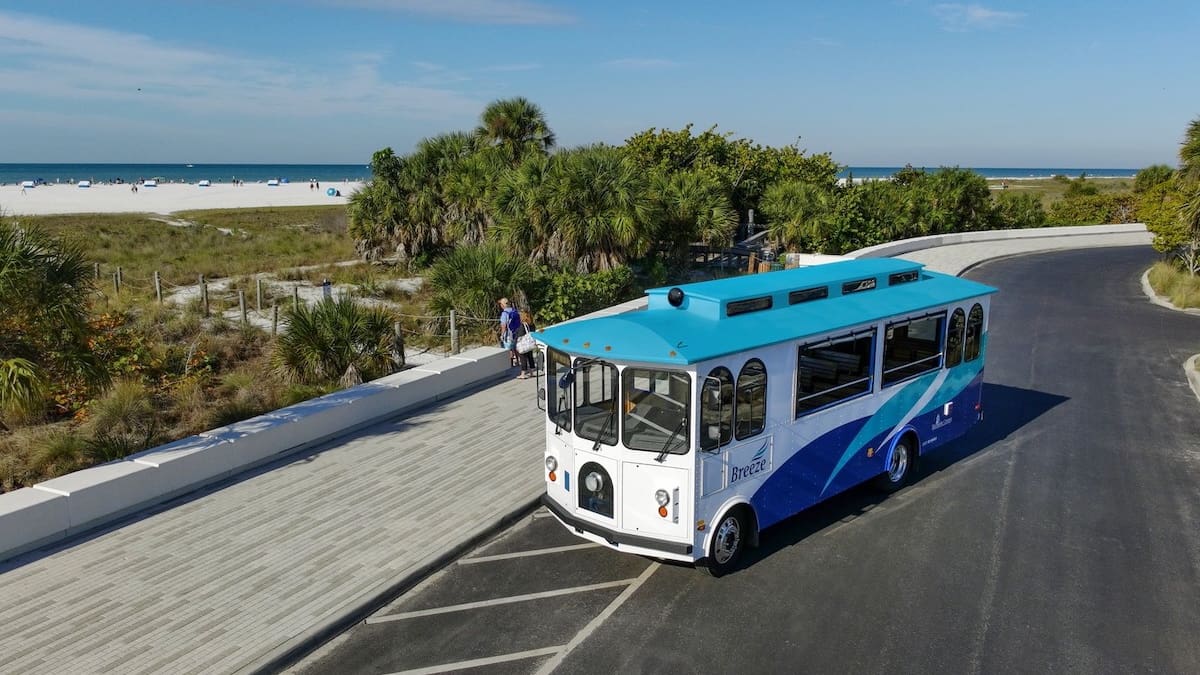
The trolley is one of the easiest ways to reduce “parking fatigue” on busy days — especially if your home base is near a stop and your group is traveling light. Think of it as your stress-reduction tool: you can keep your day flexible without fighting for a spot every time you want to move around.
When the trolley is a great choice
- Village dinner nights: skip the “where do we park now?” problem and enjoy a relaxed night out.
- Peak-demand beach days: if the main lot feels packed, the trolley can be faster than circling.
- One-car groups: keeps everyone moving without putting all the hassle on the driver.
When the trolley is not worth it
- If you’re hauling a full beach setup (coolers, chairs, toys, multiple bags).
- If you’re juggling nap schedules or a tight reservation window across the island.
- If your group prefers “door to door” convenience over a short walk + a short wait.
Time the trolley like a local
Don’t guess. Check the live tracker before you walk out the door so you’re not standing in the sun “hoping it’s coming.” That one habit makes the trolley feel effortless instead of random.
Local ride services (Frog Hop + OnDemand): the easiest “no-parking-stress” move
If your goal is to avoid parking loops — especially for Village dinner nights or peak-season beach days — Siesta Key has two “car-light” helpers worth knowing about: a local tips-only ride service and the county’s on-demand public rideshare.
Frog Hop (local, tips-only rides on the Key)
Frog Hop is a local ride option many visitors use to move around the island without driving. It’s commonly marketed as “tips only,” and it’s especially popular for short hops between the Village, the beach, and your rental when parking feels tight.
OnDemand (public curb-to-curb rideshare)
OnDemand is Sarasota County’s request-a-ride service (a shared, curb-to-curb option). Think of it like a public rideshare: you request a trip, share when needed, and it can be a smart Plan B when you want something more direct than waiting for the trolley.
Best use cases
Village dinner nights (skip the parking hunt)
Peak-season beach days (reduce stress + walking)
One-car groups (everyone can come and go)
“Park once” days (move around without moving your car)
Service areas and availability can change over time. Before you build a whole day around any one option, do a quick check the morning of your trip (app/site/phone) so your plan stays smooth.
Siesta Key beach parking strategy (what actually works)
Parking is simple on Siesta Key when you treat it like a strategy, not a gamble. The main Siesta Beach lot is the easiest “drive-and-park” option — but on high-demand weeks, timing matters more than luck.
Peak season reality (local pattern you can plan around)
- Weekdays in peak season: it’s common for the main lot to be full by ~9:30am.
- Weekends: plan even earlier than weekdays.
- Holiday weekends: it’s common for the lot to be full by ~8:30am.
- Smaller access points fill fast: many have tiny capacity (sometimes around a dozen cars), so they can hit “full” surprisingly early.
Weekday vs weekend: the easiest rule
If you can choose your “big beach day,” midweek is usually easier than Saturday/Sunday. On weekends, commit to an early arrival window or plan a car-light day using the trolley/rideshare.
Best times of day (simple and reliable)
- Easiest: early morning
- Hardest: late morning through mid-afternoon
- Often improves: later afternoon as some day-trippers leave (varies by season and weather)
The “park once” mindset (the #1 parking hack)
If you’re going to the beach and then dinner, don’t move the car three times. Build your day so you park once, stay put, and transition using walking, trolley, or a short rideshare.
Plan B ladder (when lots feel full)
-
Fastest win
Go trolley-first (don’t circle). Commit to a walk/trolley/ride day and skip the parking loop entirely. On peak demand days, you’ll often reach the sand faster than hunting for a unicorn spot.
-
Family-friendly
Drop-off + park-second. Unload people and gear first (especially with kids), then the driver parks wherever is available and rejoins.
-
Low-stress reset
Shift your beach window. If you’re not an early beach person, choose a later-afternoon beach plan on peak days — it can feel dramatically easier.
If your group gets stressed by parking, plan one “no-parking-stress” day on purpose: trolley/rideshare to the beach, then walk to food afterward. It’s one of the simplest ways to make peak season feel easy.
Beach access points: the big misunderstanding (parking is not guaranteed)
Siesta Key has multiple public beach access points — and they’re amazing for quick beach moments. The misunderstanding is assuming every access point comes with convenient parking. Many are designed for walk-up access first, and parking (if any) can be extremely limited.
How to use access points the smart way
- If you’re staying nearby: access points are perfect for sunrise, sunset, or a quick “dip in the water” without moving your car.
- If you’re driving from farther away: treat access-point parking as a bonus, not a plan. Have a backup ready.
- If your priority is easiest parking: the main Siesta Beach lot is usually the most predictable option because it has the most capacity.
The “tiny lot” reality (why timing matters)
Smaller access areas can fill early because they may only hold a small number of cars. If your day depends on access-point parking, your best move is an early arrival or a car-light plan.
Best use case
Access points shine when you can walk from your rental. If you’re driving in from elsewhere, plan like a local: arrive early or use Plan B.
Bikes & e-bikes: when they’re amazing (and when they’re not)
Biking can be a fantastic way to get around Siesta Key — especially for short hops — but it works best when your group is traveling light and comfortable riding in warm weather.
Best for
- Couples and confident riders
- Quick Village runs, coffee stops, and nearby beach access
- Guests who want a “no-parking” option for short trips
What makes biking actually work on vacation
- Be honest about beach gear. A backpack + small cooler is manageable; a full beach setup usually isn’t.
- E-bikes help. They reduce friction in heat and for longer stretches.
- Plan your timing. Early and late rides feel better than midday.
Golf carts, LSVs, and “street-legal” rentals (a quick reality check)
Visitors often say “golf cart,” but there’s an important difference between a golf cart and a low-speed vehicle (LSV). If you’re considering a cart-style rental, confirm it’s street-legal for your intended routes and that you understand where it can and cannot be driven.
- Ask before you rent: Is it an LSV with proper registration/insurance and required equipment?
- Route planning matters: rules depend on the roads you’ll use (posted speeds and local designations).
- Vacation reality: for most guests, trolley/rideshare is simpler than trying to “figure out the cart rules” mid-trip.
Best plan by travel style (so you don’t overthink it)
Families
Best plan: car or car-light. You’ll appreciate flexibility for groceries, beach gear, and quick pivots. Then use trolley/rideshare for one “no-parking-stress” dinner night.
Couples
Best plan: car-free if you’re near the Village; otherwise car-light. Walk for dinner nights when possible and treat rideshare/trolley as your friction-free backup.
First-timers
Best plan: prioritize a walkable home base if you can. Being able to walk to food and stroll at night makes the entire trip feel simpler — and reduces “where do we park now?” decision fatigue.
Snowbirds / longer stays
Best plan: a car usually helps for routines and errands, but even with a car you’ll enjoy the island more when you create a few “park once” days.
The easiest Siesta Key day
Pick one day where you don’t drive at all: walk/trolley/ride to the beach, then walk to food afterward. You’ll remember the beach day — not the parking hunt.
FAQs
Is Siesta Key walkable?
Parts of it are — especially Siesta Key Village. Outside the Village, walkability becomes very address-dependent. Heat and beach gear can also make short distances feel longer than you expect.
Can you do Siesta Key without a car?
Yes, especially if you stay in/near Siesta Key Village and plan beach + dining days. Many guests use a car-free or car-light plan and rely on the trolley or rideshare to avoid peak parking stress.
Is the Siesta Key trolley free?
It’s commonly treated as a free, visitor-friendly option on Siesta Key. Because transit policies can change, check the current ride policy before your trip if it’s a must-have for your plan.
What is Frog Hop on Siesta Key?
Frog Hop is a local ride option many visitors use to move around the Key without driving. It’s commonly promoted as tips-only and can be a great “no-parking-stress” choice for Village nights and short hops.
Is OnDemand the same thing as the Siesta Key trolley?
No. The trolley is a fixed-route public option. OnDemand is request-a-ride, curb-to-curb public rideshare. Both can be useful depending on how direct you want the trip to be.
What time should I arrive to park at Siesta Beach during peak season?
If you want the easiest experience, plan early. In peak season it’s common for the main lot to be full by ~9:30am on weekdays, earlier on weekends, and around ~8:30am on holiday weekends.
What do we do if the Siesta Beach lot is full?
Don’t circle endlessly. Use the Plan B ladder: go trolley-first, do drop-off + park-second, or shift your beach window to later in the day when it often loosens up.
Where do I park for Siesta Key Village at night?
The simplest strategy is “park once” and walk. If parking feels stressful on busy nights, use the trolley or a short rideshare so you can enjoy dinner without turning it into a parking mission.
Do beach access points have parking?
Not always — and when they do, it can be extremely limited. If you’re not staying right next to one, treat access-point parking as a bonus and keep a backup plan ready.
Related Guides
These guides pair perfectly with your transportation plan — especially for peak season and first-timers.
Crowds change everything — including driving, trolley usefulness, and parking strategy.
Choose a walkable home base (or a quieter area) based on how you want to get around.
Which beach fits your group — access tips that affect your transport plan.
Siesta Key Beach Parking Guide
If parking is your biggest stress point, this is your exact playbook.
Plan your evenings — transport matters more on event nights.
What to Pack for Siesta Key (By Season)
Pack smarter so car-free or car-light days are easier.
A perfect add-on for “car-light” days when you’re exploring short hops.
The evergreen planning basics that reduce last-minute stress if weather shifts.
First-Timer’s Guide to Siesta Key
The complete planning framework for first visits.
Find your Siesta Key vacation rental
Browse our handpicked homes and condos — walkable locations, 5-star stays, and local support that makes your trip feel effortless.
-
✓
Best trips start with the right location — filter by beach access, Village proximity, and more.
-
✓
Comfort-forward amenities — pools, kitchens, parking, and the “little things” families love.
-
✓
Local team — real people, real help, and insider tips once you arrive.